Case Study
Transforming an emerging digital presence into a clear, compelling service story
Duration
Aug 2025 - Present
Main Task
Clarifying Value propositioning through website redesign, polishing the product.
Hats Worn
UX Research
UX Design
Product Strategy
(Design Team of 6)
Tools
Figma
Illustrator
Status (In Progress)
About
ProAction Entrepreneur is a nonprofit startup initiative dedicated to improving the mental health and well-being of entrepreneurs and their support systems. Their mission is to prevent distress and burnout for entrepreneurs and equip accelerators/investors with tools such as trainings, and hub of care access and events that reinforce the vision that entrepreneur success should not come at the cost of their health
The Brief
ProAction Entrepreneur brought our team on board with a broad mandate: Develop a Research and Design Strategy to directly inform how they position themselves in the market as an entry level wellness startup geared toward entrepreneurs, clarify their value offering, and build trust to increase conversion while ensuring every decision is rooted in creating a digital environment to foster entrepreneur wellbeing, normalizing the taboo of support seeking.
What was our Process?
This project came to us in its early days, lots of promise, but still taking shape. That meant we couldn't skip ahead to design. We needed to first get clear on what the product was and the value it offered, then build out the UX and online experience to connect with users and guide them toward conversion in a friction-free manner. And we had to do all of this within a tight four-month timeline, finding a scope that would bring meaningful product clarity without overreaching.
The Roadmap at a Glance
Our Assumption Mapping
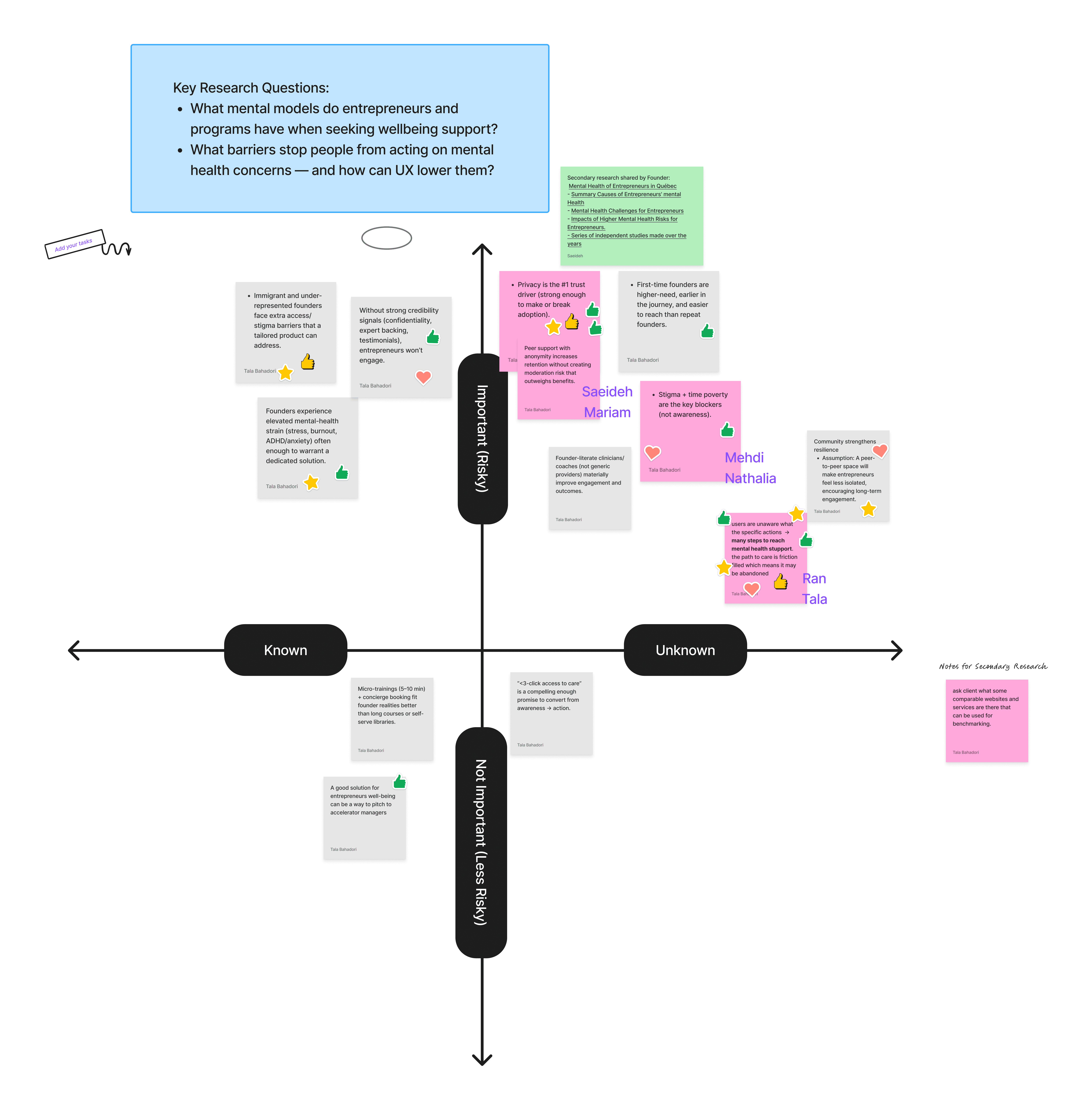
Our Research
72%
of entrepreneurs experience at least one mental health condition
Freeman, MA, et al, 2015-2019
Primary Research
Survey/Questionnaire Filled by Entrepreneurs
85%
of participants prefer quick and easy access to support, but support paths are complicated and time-consuming
81%
of participants claimed wanting community
but
only
8%
utilize any form of community
Humanizing Our Findings Through Sofia

Sofia Martinez
"The Resilient Juggler"
42 yrs • Montreal
Founder & CEO
$300K sustainable fashion e-commerce
Some days I feel unstoppable. Other days, I'm answering emails during my daughter's bedtime story wondering if I'm failing at everything that counts.
Her Journey with Proaction and Reason for Task Abandonment
Ideation Overview
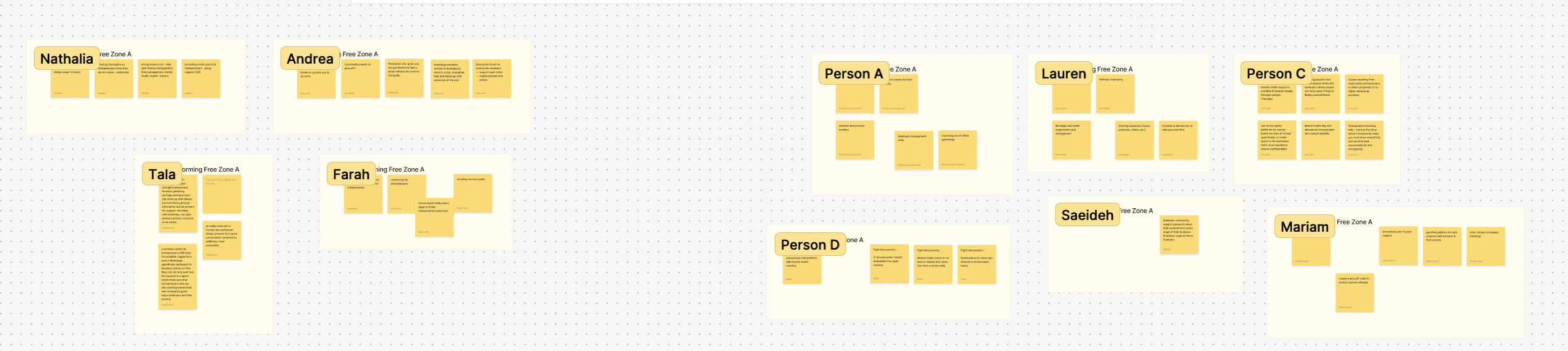
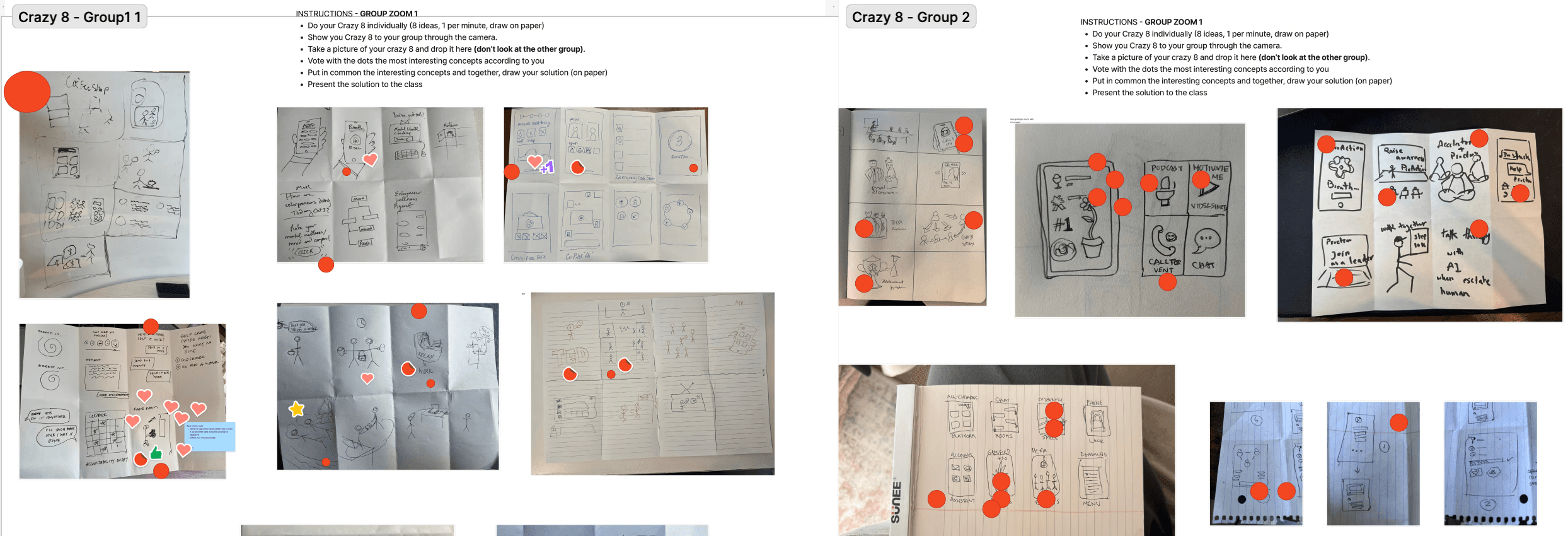
Our How Might We Statement guides us from divergence to direction; we used it to conduct a design workshop with a team of 12, moving through three rounds of ideation, from timed brainstorming to crazy 8s, generating a wide range of concepts, practicing critical thinking pushed through rapid ideation.

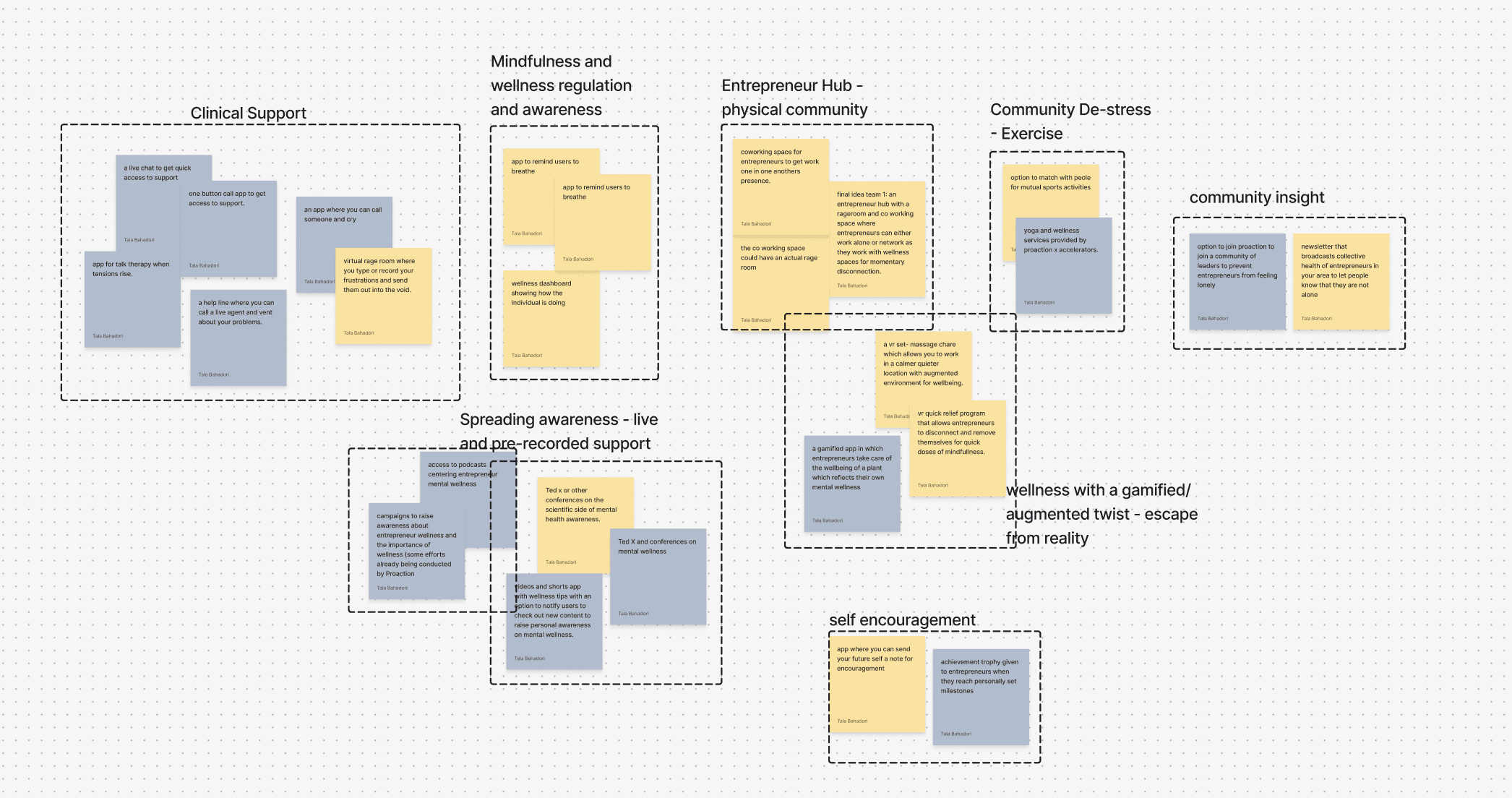
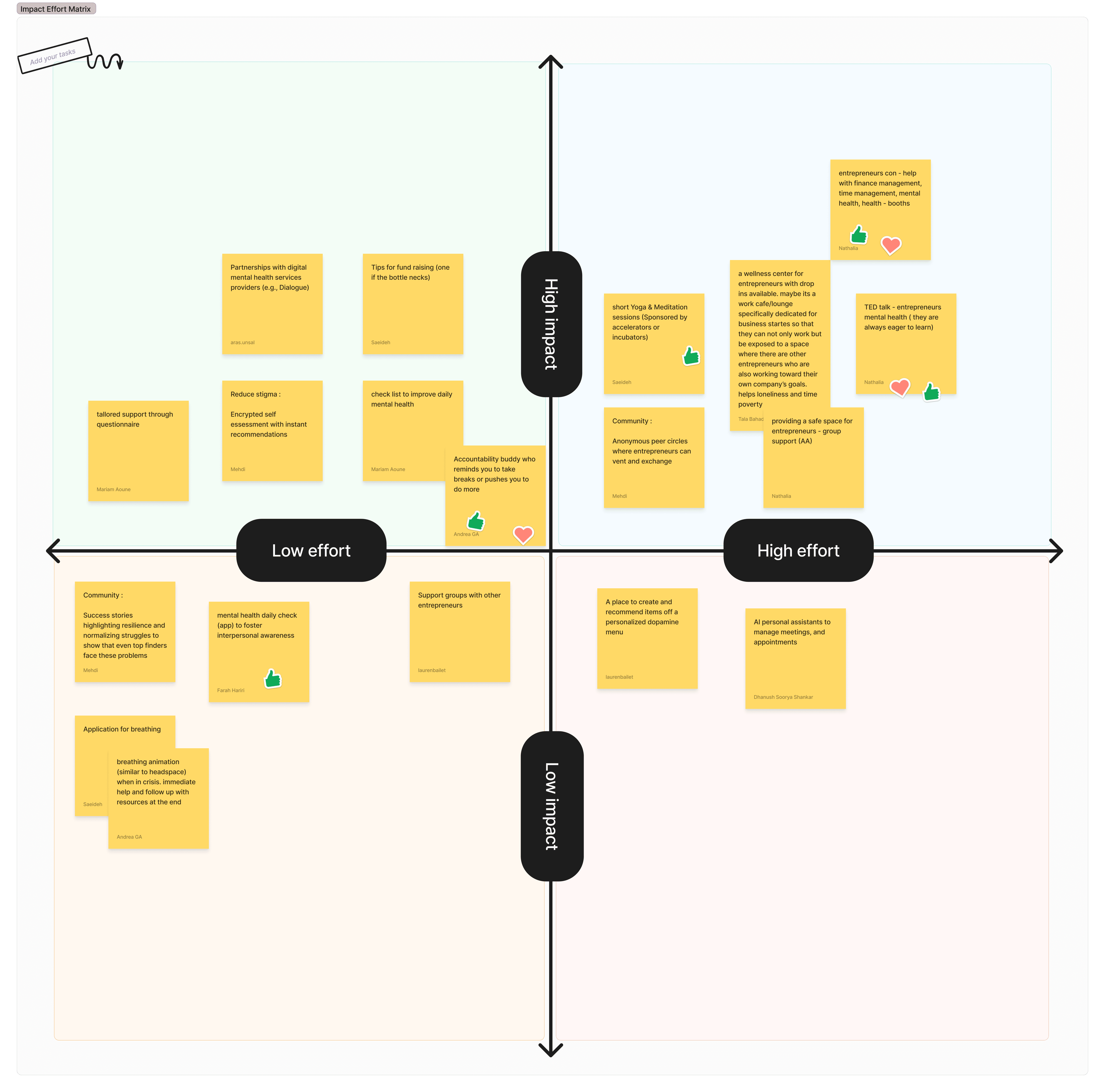
We then moved into a round of individual ideation and solution mapping. Here, I clustered the design workshop findings into themes and assessed them through an impact-effort matrix to identify the most viable directions.
With support from AI ideation, Ideas were pushed further, and we narrowed to 6 core concepts and identified an MVP. Final team synthesis revealed four pillars for our solution:
Quick Support
Daily checks, breathing app, Live Chats. Mentorship Matching.
Community Cultivation
Anonymous circles, success stories, accountability buddy support groups.
Educational Content
Wellness centers, conferences and talks on mental health, content on entrepreneur wellness.
Clinical Support
quick access to support through professional providers; one-on-one sessions.
Sitemap Drafting
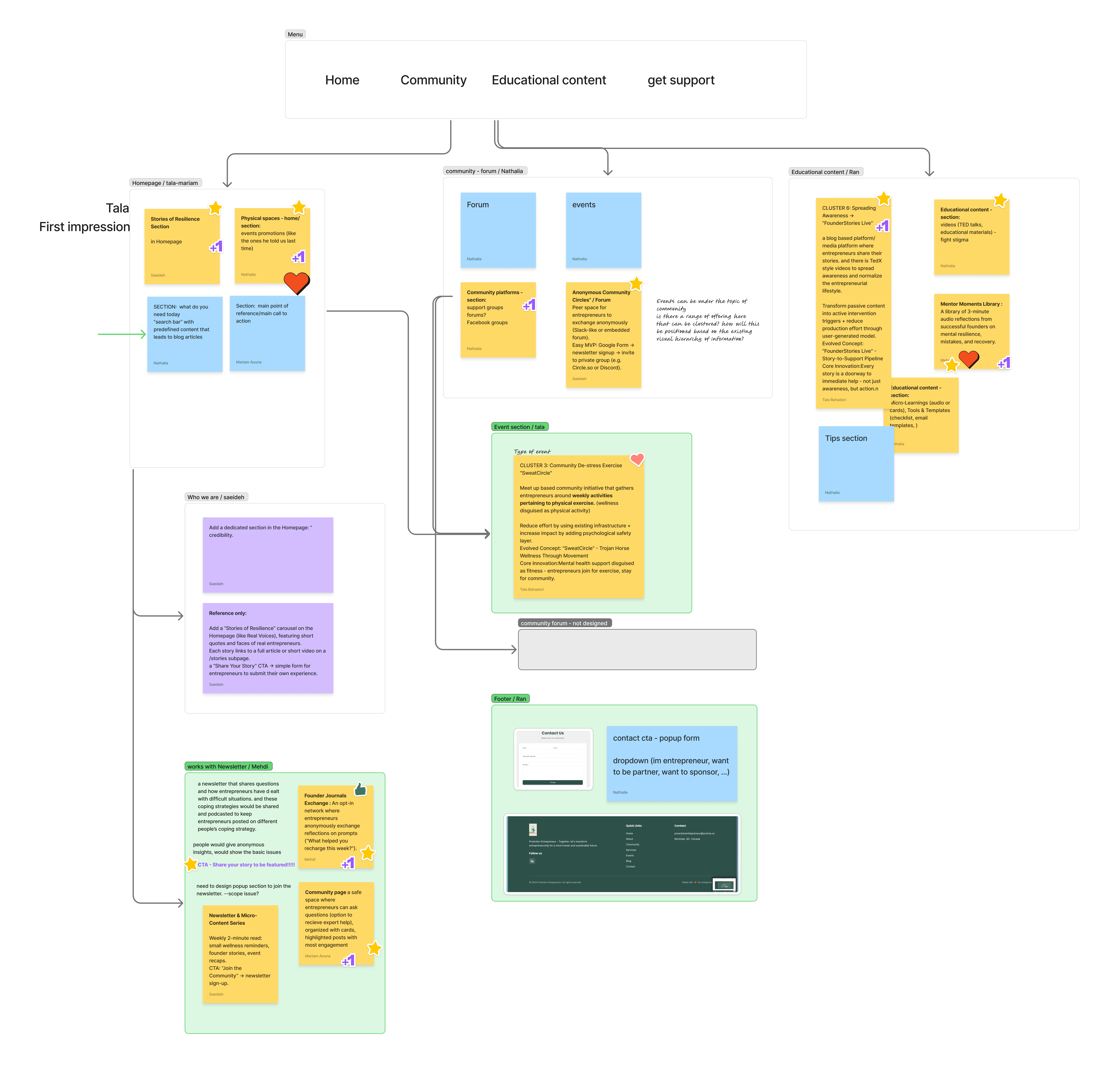
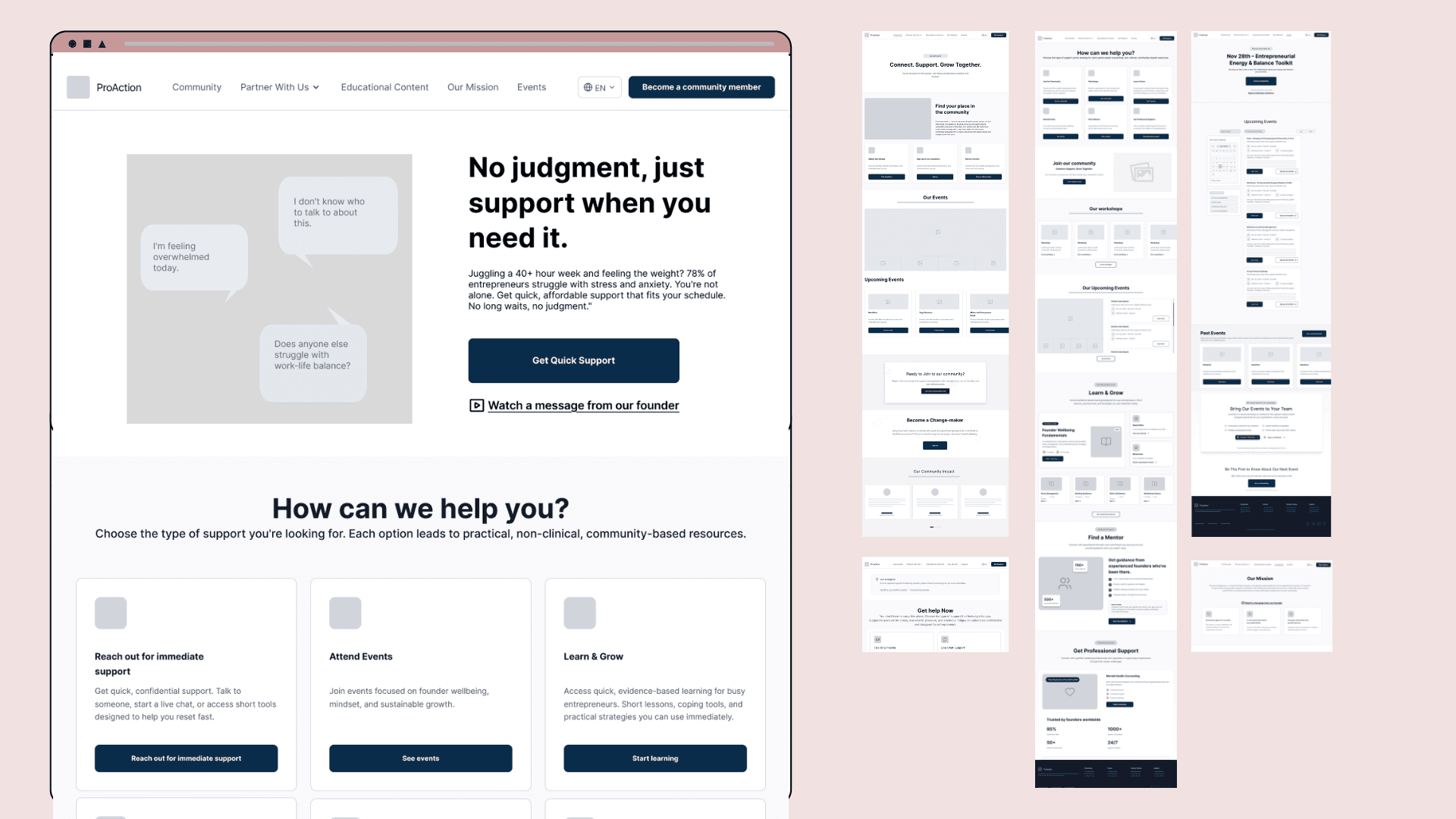
Ideas compiled after our second round of individual solution modeling sessions that we voted on keeping were reorganized and mapped into a potential model for the information architecture design of the site. This visual design session helped us create a clear guide on how we were to logically group idea clusters to consolidate the site map.
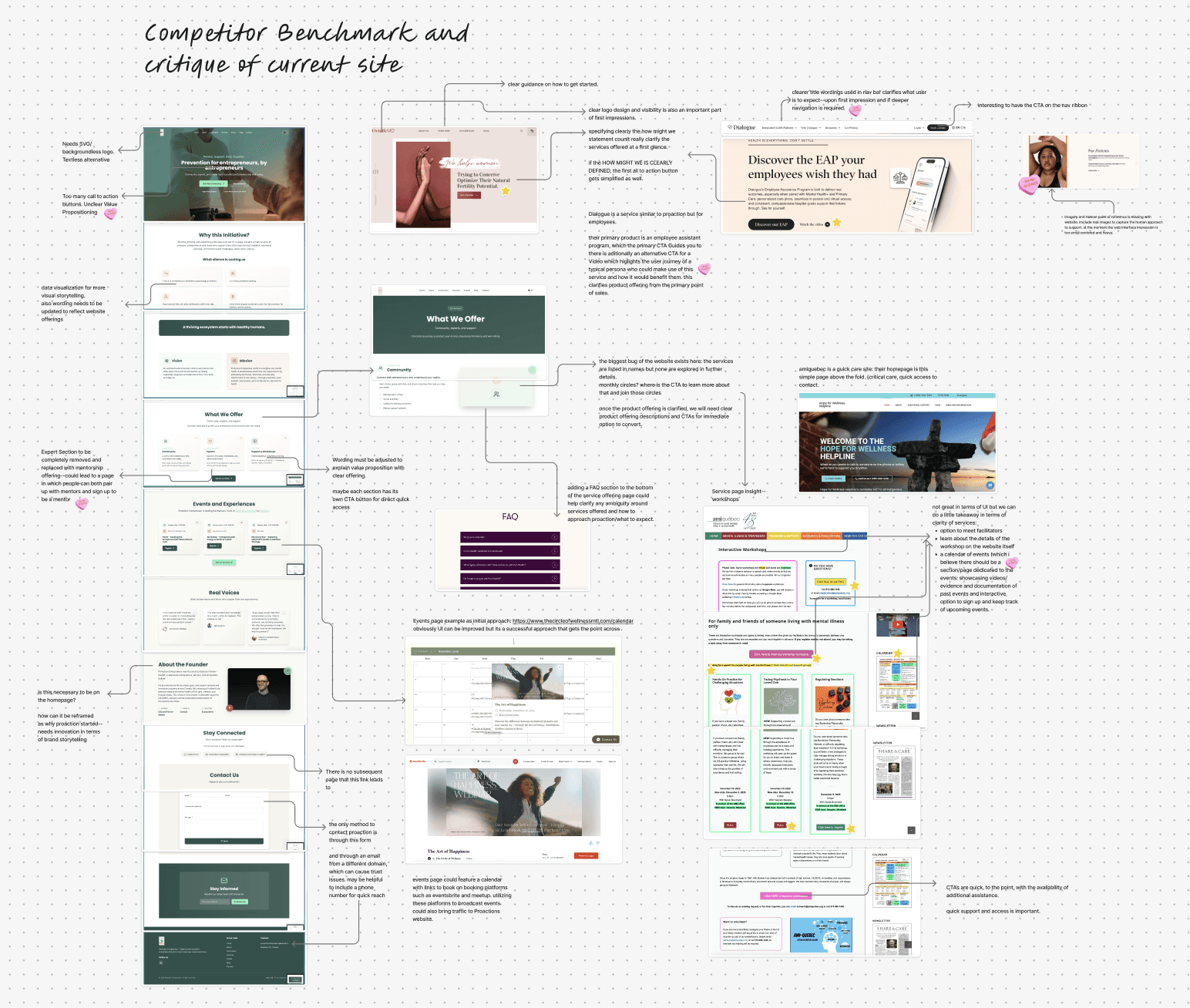
I conducted an extensive benchmark of competitors to identify best practices in product presentation and site architecture, as we did not have a timeframe available for a cardsorting practice.
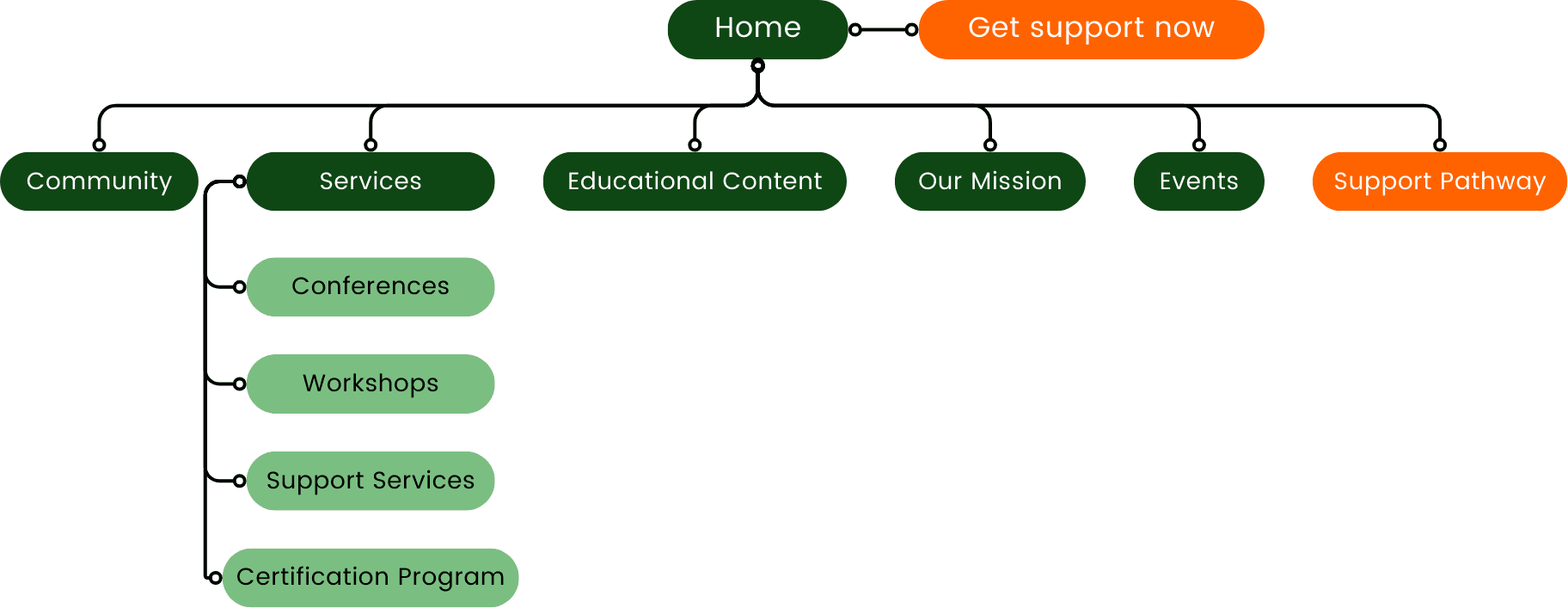
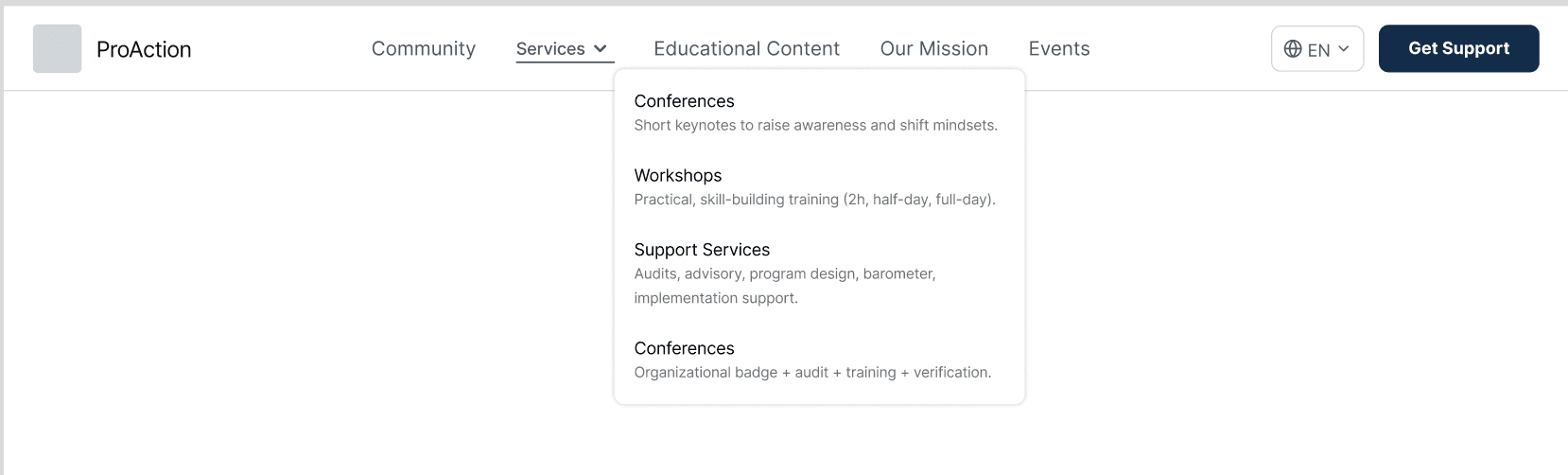
The final pretested sitemap involved two main CTAs for support: one leading entrepreneurs towards all support pathways and the other for getting immediate support during crisis as well as a vertical service flow for B2Bs under the services tab.
The first draft prototyped for usability testing
6
Pages Designed
6
Usability Tests Conducted
4
Iterations Made
Testing Procedure
"If you were a highly stressed entrepreneur seeking support, what would. you do?"
Method and Reasoning
6 participants recruited, and observed as they navigated a list of tasks utilizing the think aloud method to better understand mental models around the proposed design. follow up questions were asked throughout process for deeper insights.
Focus Points of Test
Validating Information Architecture
Assessing Feature Discoverability
Onboarding Clarity
Assessing accessibility of support pathways
Critical support discoverability in high stress contexts
-Quotes from our confused users
The Final Solution
(Explained through Iterations)
Central Hub: where every feature is accessible on one click
Previously
Support paths were unclear
Solution
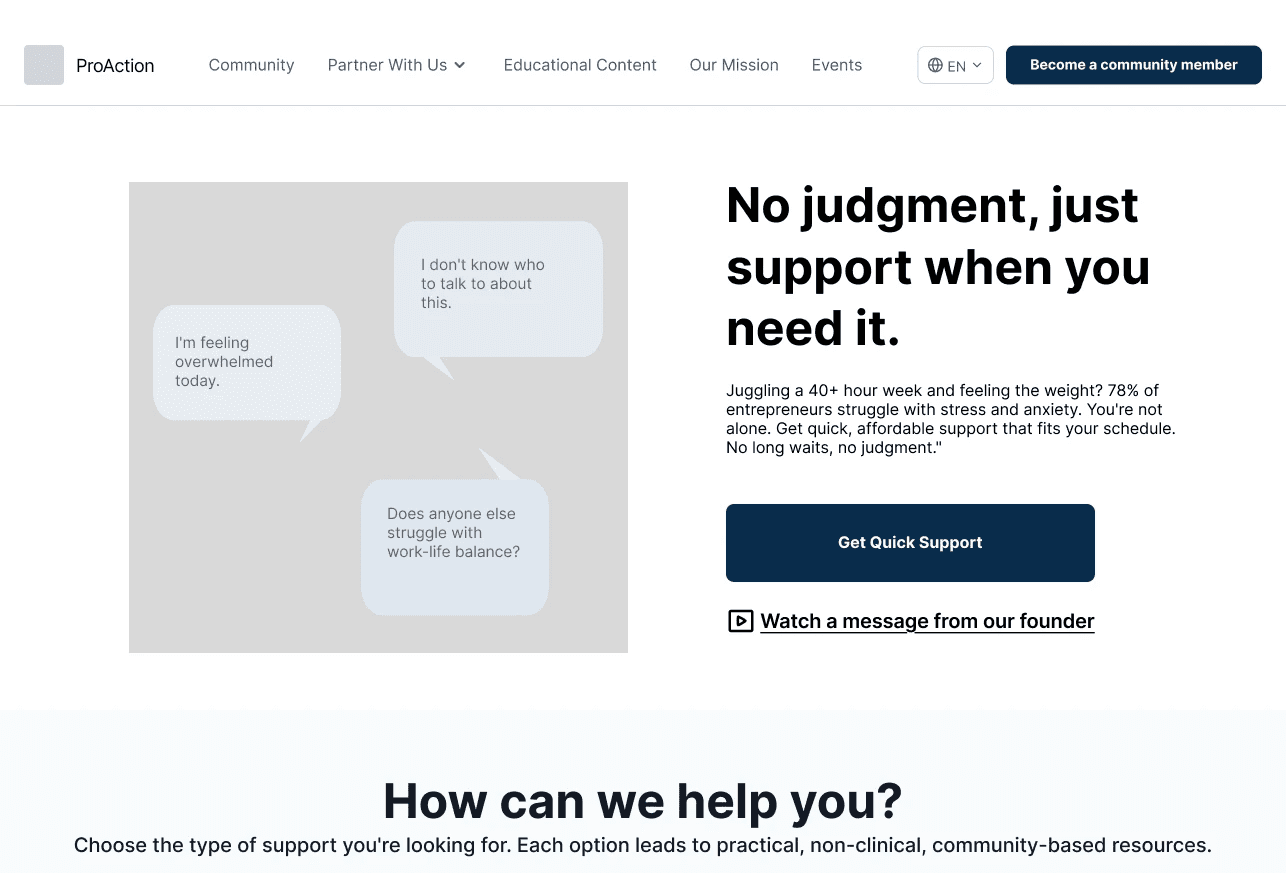
The main hero CTA, optimized to fulfill our goal for quick optimized support, leads the user to a central hub where all possible resources are accessible within 1 click, and users can keep scrolling to learn more about each feature before being redirected to a different page
Crisis Support: both live and self soothing support options, available immediately
Previously
Crisis support was separate and buried against the main CTA
Solution
All Support now clustered under main CTA as quick support, with crisis support as first option when you navigate to the quick support Central Hub.
Join The Community: too many forms
Previously
Users were confused due to the overuse of sign-up forms for different onboarding purposes.
Solution
Now all sign up forms are streamlined under join the community CTA, and users are prompted through checkmarks to clarify what purpose they are joining for, improving the quality of this micro-conversion.
"Services? Support? What's the Difference?"
Previously
Users were all confused about services and support terminology, believing that both should lead the user to the same solutions
Solution
The CTA for B2B services was renamed to "Partner With Us" to ensure clarification of the difference between B2C and B2B services.
Product Refining Strategy: Community Mentorship program
Previously
Community involvement program was missing despite high demand
Solution
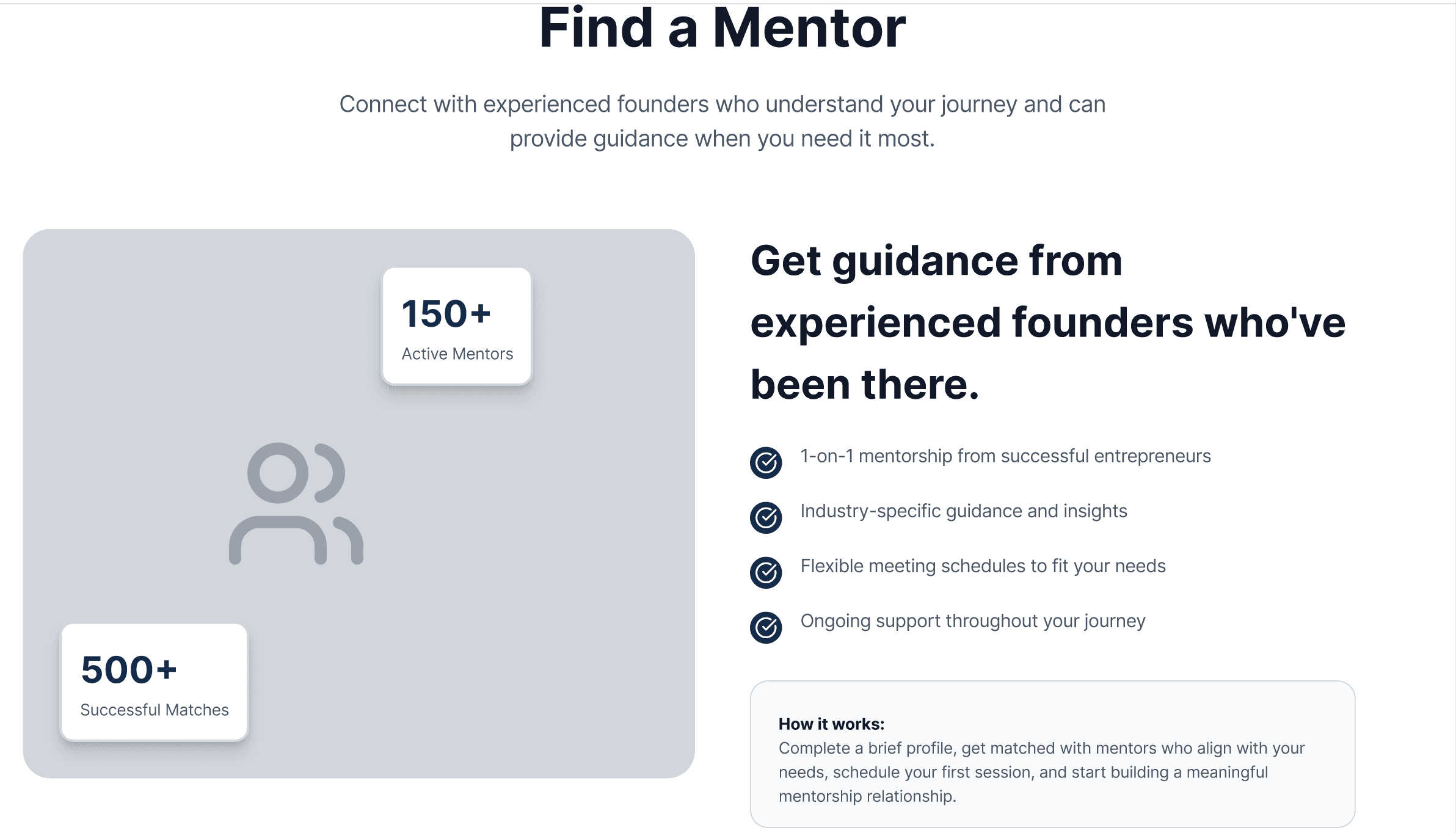
Proposed peer mentorship program that allows entrepreneurs to sign up to assist other entrepreneurs who have signed up to receive help, creating a proactive environment of mutual support
Key Impacts
Value proposition is now clear, as user is given all the information about this non-profit initiative within one click
all the different designed engagement factors and conversion points are now 2 clicks away
a page dedicated to community efforts, the co-mentorship initiatives help bring in low pressure, supportive community
Personal Takeaways
Early-Stage Product Sharpened My Product Thinking
Working with an early-stage product pushed me beyond interface design into product thinking, translating ambiguity into clear direction and helping shape not just a feature, but the product's broader trajectory.
Undefined Roles Taught Me the Value of Stepping In
Early on, we struggled with fragmented coordination and unclear responsibilities. I felt a need to start voicing clarity for directions, helping to align priorities and create structure. What followed surprised me: others had felt the same hesitation, and once there was momentum, they stepped in too. We just needed somewhere to start.
Client Testimonial
“I want to emphasize that the work presented by the team was of a highly professional level. Their research approach, methodological structure, the quality of the insights drawn from the interviews, as well as the clarity of the wireframes and the final proposal, far exceeded my expectations.
I was truly impressed by their ability to navigate a complex, sometimes uncomfortable topic, without a perfectly defined brief from the start a typical context in real UX mandates dealing with wicked problems while still producing something coherent, useful, and concrete. Their attitude and rigor deserve to be highlighted.”